
시안용 연출 이미지
English introduction · 시안용 예시
Reading Korea through faith and culture
A place to begin: records, cultural works, and the questions people share.
A place to begin
Begin with something you can look at closely: a page, a building, a book or a conversation. Ask who made it, who it was for, and what questions it might help you explore. These small starting points can open a thoughtful way into the relationship between faith and culture.
This introductory example explains how to read the collection. The illustrative people, institutions and works on this site are labelled as examples; they should not be treated as verified historical sources.
History in everyday spaces
When you look at a place, separate what you can observe from what you need to check. A doorway, a window or a seating arrangement may suggest questions about how a space was used. A photograph alone cannot establish the date of a building or the experiences of everyone who gathered there.
Follow the photograph back to records, captions and accounts from different perspectives. Notice when the materials were made and whether they describe the same moment. Keeping these distinctions visible makes a story easier to assess and understand.
Reading and gathering
Books and questions
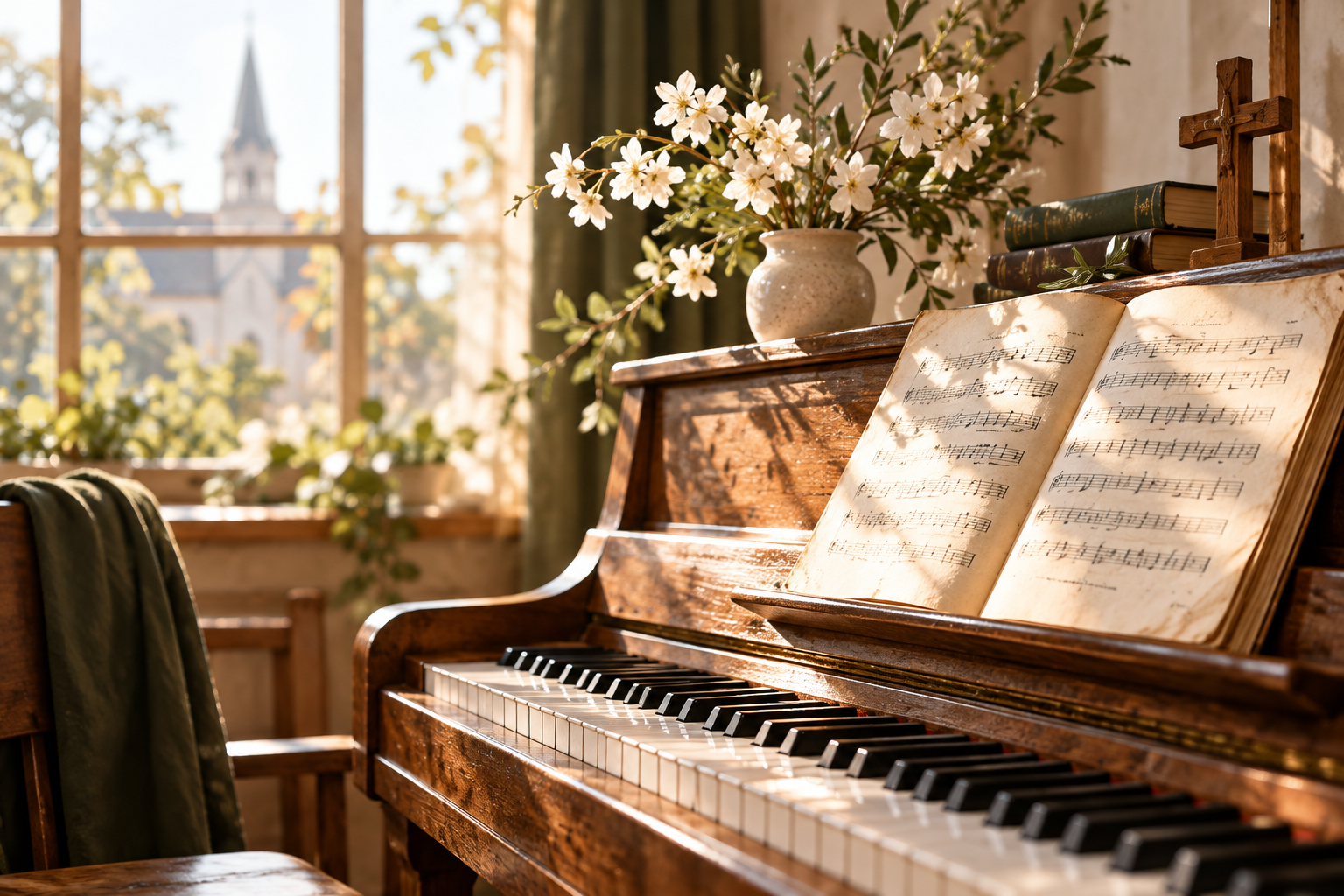
Illustrative image · 연출 이미지
A place to read together
Illustrative image · 연출 이미지
Books, music and shared questions
A work of culture invites more than one kind of reading. You can begin with its words, images or sounds, then consider its form and intended audience. Your response is part of that encounter, but it is different from information about the work’s creation or publication.
Try keeping three short notes: what the work shows, how you respond, and what you would like to learn next. This practice helps a personal impression become a question that can be explored through other materials.
Reading with others adds another layer. Someone may notice a word you passed over or connect a scene with a different experience. Rather than seeking an immediate shared conclusion, identify which questions you can return to the material to examine.
Sources and reading
- About this introduction
Original example text explaining how to approach records, cultural works and related reading. It does not present a sourced historical chronology.
- Illustrative materials
The images, sample profiles and fictional works are explicitly labelled. They are not archival proof or actual institutional recommendations.
- Language
This page provides a complete English introduction. Related destinations are labelled by their actual content language.
함께 읽으면 좋은 이야기


이 조건에 맞는 콘텐츠가 아직 없습니다. 다른 주제를 선택해 보세요.